Seattle, Washington

I run a bindery.
I build things.
I stay curious.

I'm Ron. I own Puget Bindery, build software for the business, and write Operator Field Notes about buying, running, and handing on small businesses. Some of my writing takes place in other worlds.

What I'm working on
Ron Diver, smiling outdoors
Absurdly curious.
Relentlessly optimistic. Lucky dad.
A working life. A curious mind.Business · Software · Words

Selected work

The business.
The work behind it.

Puget is the center of my working life. The software starts with its everyday problems.

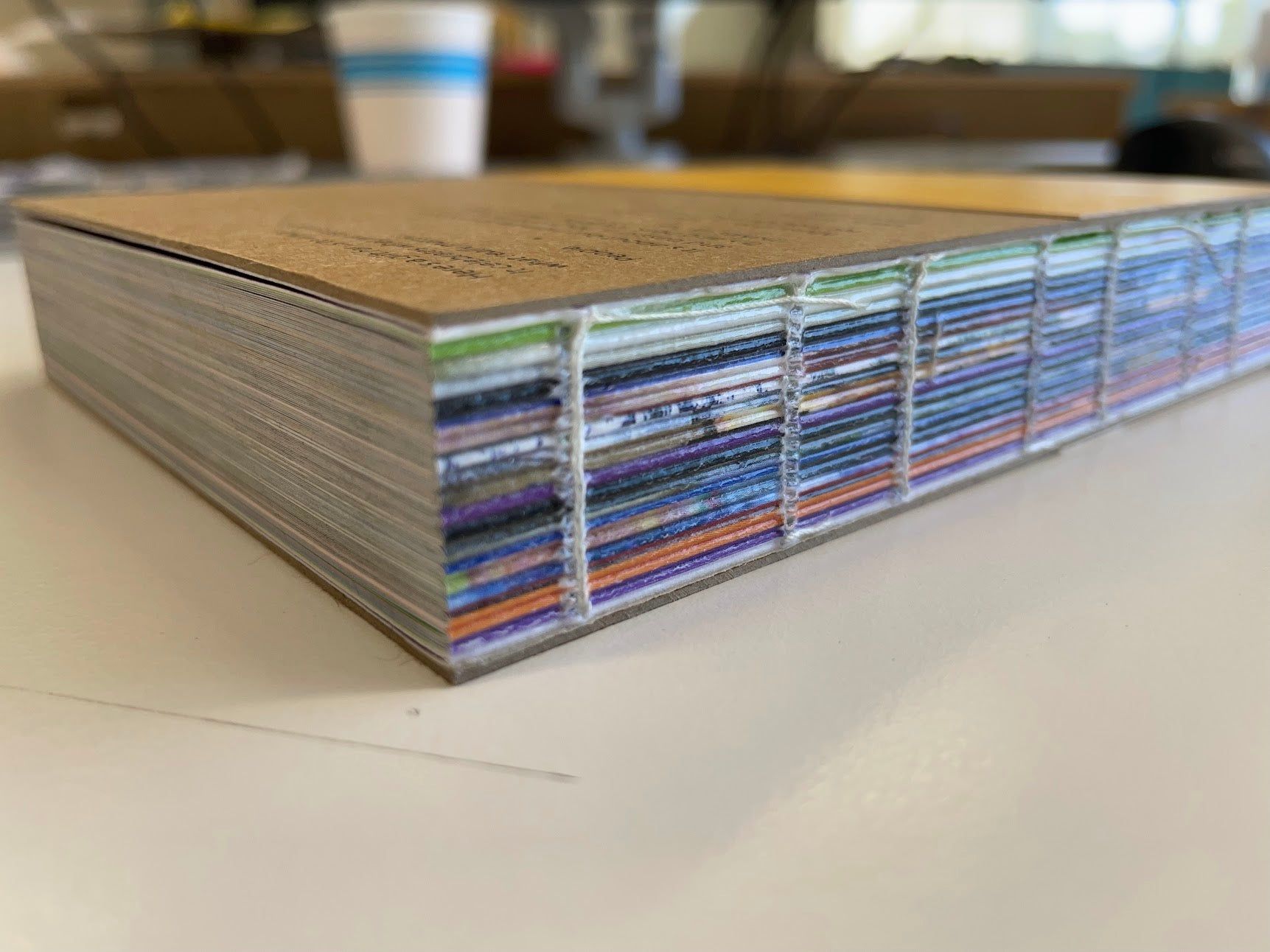
An exposed sewn book spine, showing its folded pages and binding threads Puget Bindery · Down to the stitches.

The business

Puget Bindery

Turning printed sheets
into something you can hold.

I own and operate Puget Bindery in Kent, Washington. We bind and finish work for printers and publishers across the Pacific Northwest. My focus is on growing the business and improving how it runs.

Visit the bindery

In use at the bindery

The software
behind the shop.

I'm building the operating software we use at Puget, starting with customer requests, quoting, and production. Using it in the business means the next improvement has somewhere to be tested.

What it does, and where it might go

AI helps turn a customer's email into the details needed for a quote. Those details are reviewed before the job moves on. The broader project connects the request, the quote, and the work on the floor.

I'm also considering what it would take to make this useful outside our own shop. That's an open question, with the bindery as the place to test it.

RequestQuoteJobKeep the thread.

Writing

Business, people,
and possible worlds.

Field notes from the business, a book about buying one, and stories set elsewhere.

Letters from the shop

Operator Field Notes

Buying, running, and handing on a small business.

I write about the equipment, people, and cash that keep a shop working, and what a buyer needs to understand before taking responsibility for it. These are also the questions behind my forthcoming book, Buy the Shop.

Start here · Letter No. 01

The business has to survive the sale.

A shop changes hands on paper. Its people, customer relationships, and operating judgment have to make the trip too.

Read the opening letter

Nonfiction · Forthcoming

Buy the Shop

How to Evaluate and Finance a Small Manufacturing Business

Understand the equipment, people, and cash behind the purchase before you commit to buying a business.

Fiction · Manuscript

Arrangements

Three connected stories about the distance between a person and the record a system keeps of them.

Science fiction · Manuscript

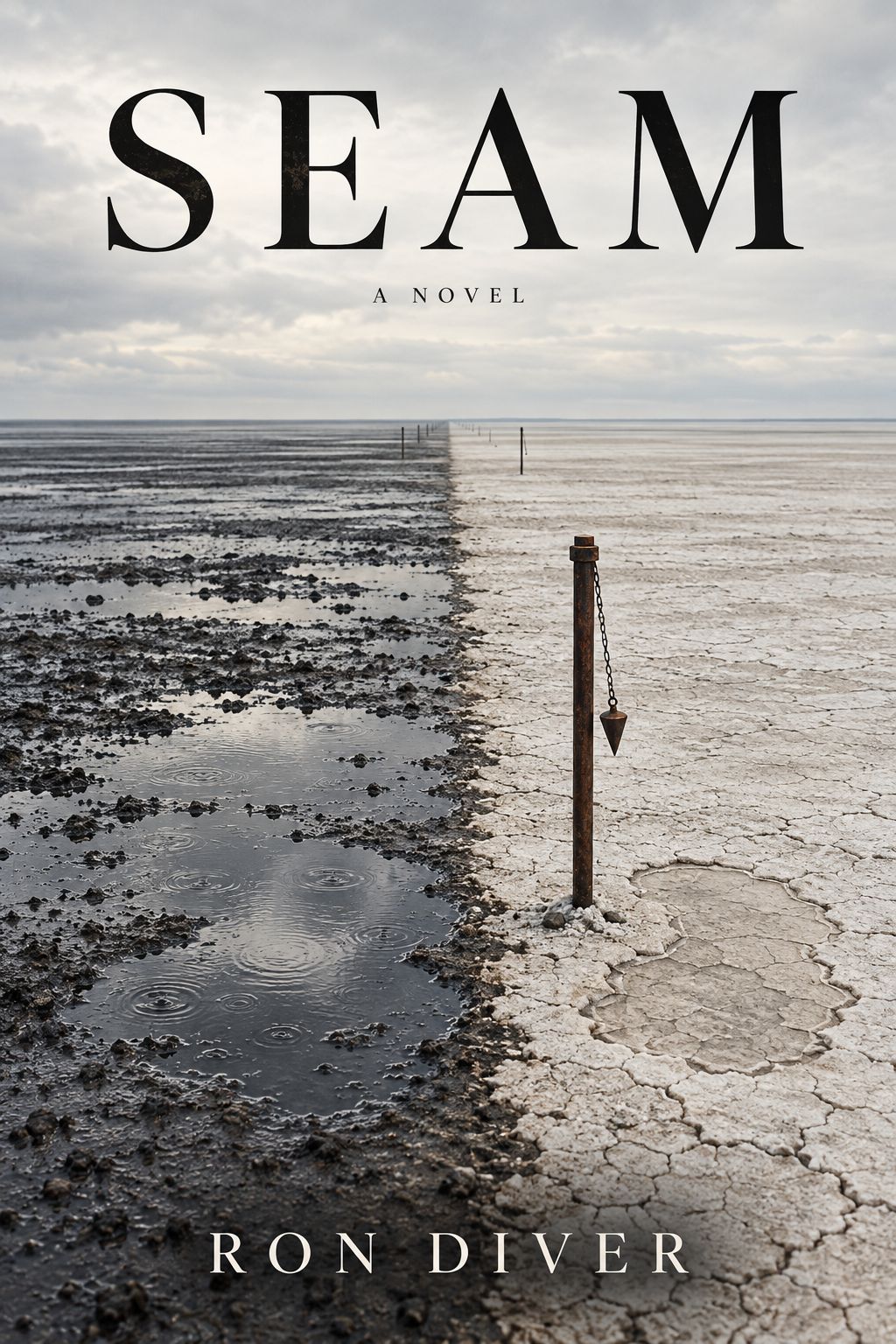
BEAM

A physicist tries to repair a fractured reality. The repair may erase the people who now live there.

Buy the Shop is in preparation for print. Arrangements and BEAM are working manuscripts.
Covers and excerpts are drafts. Excerpts open here.

A little about me

I tend to learn
by making something.

A tool, a model of a business, a draft of a story. The bindery gives some of that work a practical home. Writing gives me room to go elsewhere.

There's room here for useful work and for things made out of curiosity. I share a small selection, and I'm always interested in what other people are figuring out.

Find me on GitHub

Say hello

Let's compare notes.

Running a business, building something, or writing?
I'd be glad to hear what you're working on.

I'm also looking for businesses to acquire. If you're thinking about a sale, or know an owner I should meet, I'd welcome a conversation.

rondiver@gmail.com
From the writing desk

Business · Draft excerpt

Buy the Shop

From “The CIM Is a Story”

The broker turns on the warehouse lights and the plant becomes a photograph.

The first aisle is clean. The folder-gluer is running a straight-line carton that does not ask much of it. The seller stands on the operator side, where the paint is good. He says the machine was rebuilt recently. The equipment schedule says 2005, excellent. The confidential information memorandum says the plant has unused capacity, loyal customers, experienced management, and seller's discretionary earnings of $720,000.

You have been in the building twenty minutes. You already know the asking price is 3.5 times SDE. You know a lender may finance a change of ownership. You know the seller will provide a transition. You have read enough acquisition books to recognize the shape: durable company, retiring owner, fragmented market, room to grow.

Then the gluer changes jobs.

The operator slows it. The setup man comes over. A guard opens. Someone looks for a wrench that was not on the machine. The seller keeps talking. The straight-line carton had been a demonstration. The window carton is the plant.

That is the distance between a CIM and a deal.

A CIM is not a lie by definition. It is a selling document built from selected years, selected adjustments, selected photographs, and sentences nobody at the plant has to live inside after the wire. The broker's job is to make the asset legible enough to produce a letter. Your job is to decide whether the plant, the people, the book, and the debt can occupy the same building after the seller leaves.

Those are different jobs.

An excerpt from Buy the Shop, forthcoming in print. — Ron Diver

Email me about the book
From the writing desk

Fiction · Draft excerpt

Arrangements

The Ledger · Morning Report

Warren Cole arrived at his desk at six-forty, before the building's morning rhythm had established itself, which was when he did his best thinking. He had kept this schedule for eleven years — early arrival, the overnight data read before the day's noise began — and the habit had acquired the quality of all long habits: he no longer experienced it as a choice.

The building was a converted professional complex on the north edge of the city, the administrative center of Cascade Valley Health, a regional system of four hospitals and seven outpatient facilities distributed across a geography that included two states and a significant amount of nothing in between. Warren managed operations. In practice this meant he was accountable for the things that had to keep working regardless of what else was happening: staffing ratios, supply chains, transfer logistics, the unglamorous infrastructure of institutional survival. He had been doing versions of this work for twenty-three years. He was good at it in the way the job could measure: the ratios held, the chains held, the lights stayed on. The praise attached to other kinds of work. He had noted that once, and filed it.

The overnight summary was on his screen when he sat down. He read it the way he read everything: sequentially, without interpretation, until he had all of it.

STABILITY INDEX — NETWORK MORNING SUMMARY (v3.1)

Cascade Valley Health · All Facilities · Generated 04:00

Occupancy across the system stood at eighty-seven percent, above target but within variance for the region this time of year. Two rural facilities were short on overnight nursing coverage, a chronic condition he had three initiatives addressing and that would take longer to resolve than anyone in a leadership position wanted said aloud. The Index had flagged four patients across the network for enhanced transition support: three at Dillon, one at Harford.

He opened the four profiles in the order listed.

The three at Dillon were ordinary flags — discharge complexity, medication counts, distance from follow-up care. He reviewed each and queued them for the transition coordinators. The Harford case he looked at a moment longer. The composite was high, four confidence stars of four, but the dominant flag category was civic compliance trajectory, which was not a clinical indicator. He was familiar with the score methodology in general terms; he was less familiar with this particular input. He checked the field metadata. The variable was listed as upstream, behavioral, integrated from a third-party data provider. The provider was not named at his access level. The score was what it was.

He forwarded all four profiles with a standard instruction — Enhanced protocol. Confirm receipt — and moved on to the supply chain exceptions.

The Index had been part of his morning for six years. It occupied a column of his attention between staffing and logistics: a set of numbers, a set of colors, a set of small directional arrows. In that time its output had improved in ways that could be measured. Readmissions were down eighteen percent at the two facilities with the deepest integration. Missed follow-ups were down twenty-two. Warren had sat in enough budget meetings to know that clinical improvement and financial improvement were the same fact stated in two vocabularies, and he did not hold the second vocabulary against the first. He trusted the Index the way he trusted the rest of his instruments: he had watched it chase false leads, he had learned where its confidence outran its evidence, and he kept the record of what it had gotten right.

The record was good. That was not an opinion. It was a number, and the numbers were what they were.

An excerpt from a working manuscript. — Ron Diver
From the writing desk

Science fiction · Draft excerpt

BEAM

The Silt Basin · Halloran

The rain stopped at a line he could not see.

Halloran walked out of it and the mud went from soft to fired clay in one step, cracked into plates the size of doors, and the air stopped smelling of anything. He put his tongue against the back of his teeth. Rain. Then salt. He had learned to taste the seams before the instruments found them, which was not a skill anyone at Apex had thought to write down.

The basin had been a sea until eleven thousand years ago and a survey grid until Tuesday. Finch had taken the grid down the way he took everything down, one post at a time, so the crossing markers stood at their old spacing for two miles and then simply did not, and after that the squares were where you found them. Rain in one. The same storm in the next, dried to a white crust with the drop marks still in it. A third square had never had the storm at all and held a pickup truck with 1979 plates and no rust.

He crossed it. The truck weighed less than it should. He could tell from twenty feet, from how the springs sat.

His right knee was a brace and a decision. The gravity in the basin changed at the seams, not much, a few percent, but a few percent nine hundred times a day for thirty years was what had happened to the knee, and to the disc above it, and to the way he held his head. Younger Apex people called it the Zone lean. He had stopped correcting them.

The tower was a mile off. Apex survey, class two, forty meters of lattice steel with a mast, planted in 2003 on a square that had held still long enough to pour a footing. Finch was at the base of it. Halloran could see the coat. Finch always wore the coat, and he wore the mask, and he did not hurry, which was the thing Halloran found hardest to forgive. A man who was not hurrying had time.

He raised the glasses. Finch was doing something to the footing with both hands, kneeling, the way you kneel to tie a shoe.

Halloran started walking faster and the knee said no and he kept walking.

At eight hundred meters the tower leaned.

That was all. The mast tipped four degrees off true and stayed there, and the lattice below it stayed straight, and nothing else happened. No sound. Finch stood up and stepped back. Halloran stopped, because he had seen this before, twice, and both times he had been the one standing too close.

At six hundred meters the sound arrived. It came across the squares in pieces, a flat clap that had been through several years on its way, and under it the ring of steel already falling.

At four hundred meters the tower caught fire. It was still standing. The mast was still four degrees off. Flame ran up the north face of the lattice in a sheet, blue at the bottom, the way thermite goes, and the heat reached him through a square where the air was dry and left him at the next seam where the air was not.

Then the detonation, which was the first thing that had actually happened.

He saw the footing go. He saw the whole forty meters of it lift and open at the base and come down across three squares at once, and in one of the squares it was already rusted, and in one it was still bright, and in the middle one, the one Finch had been kneeling in, it was gone, because that square had moved on to a Tuesday when the tower had never been built.

He kept walking. There was nothing else to do with a body in the Zone. You kept it moving toward the thing you wanted and let the seams decide what you found when you got there.

An excerpt from a working manuscript. — Ron Diver